From royal courts to the red-carpet events of today, floral brooches have been worn not just as accessories, but as statements of power and personal expression. In this blog, we’re diving into the rich, romantic history of floral brooches—where they came from, what they meant, and why they’re still turning heads today.
What Is a Floral Brooch?
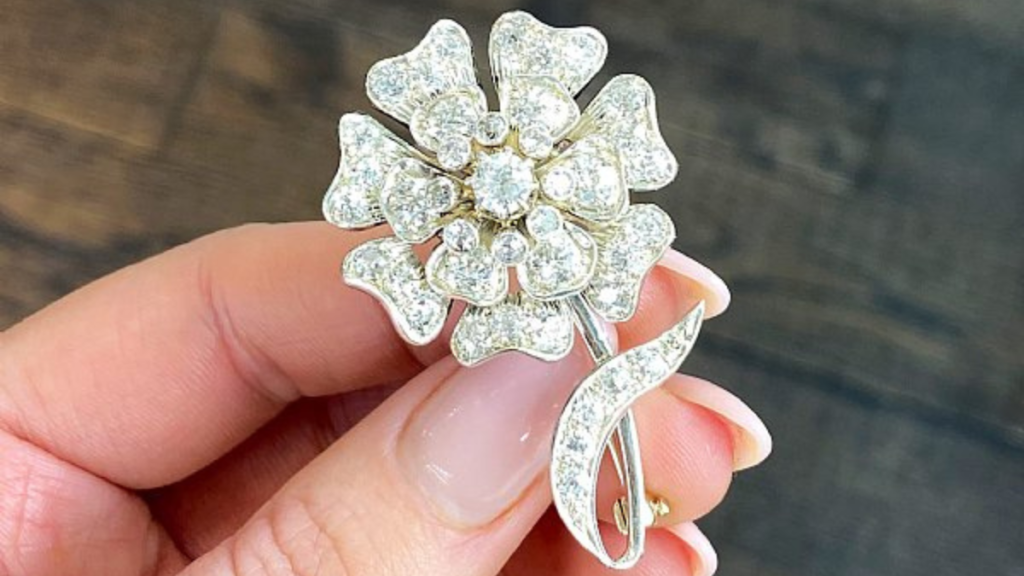
A floral or flower brooch is a decorative accessory typically fastened to clothing with a pin or clasp, featuring a floriated design. In recent years, floral brooches have made somewhat of a comeback on the red carpet, adorning the jacket lapels of celebrities such as Lewis Hamilton and Felicity Jones. Beyond the red carpet, the floriated design has been a favourite of the British Royal family for centuries and captured the hearts of many style icons over the years so let’s find out the best floral brooch styles of the bygone eras…
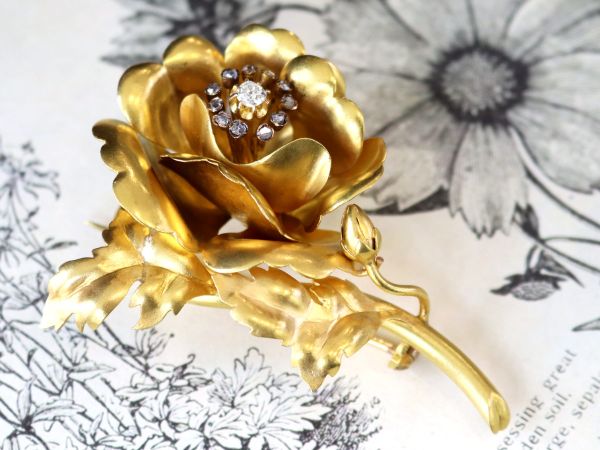
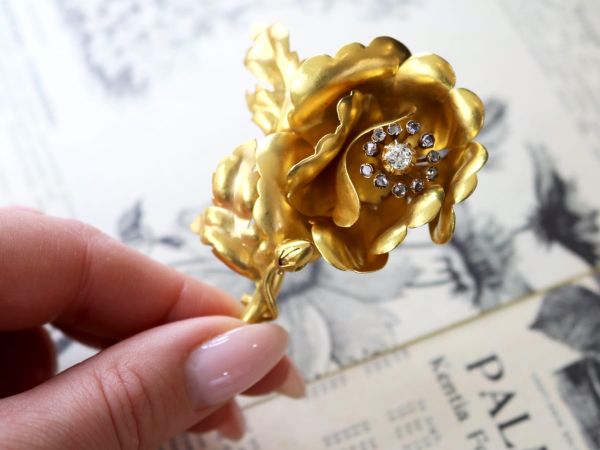
Georgian Era (1714–1837)
The Georgian period was all about grandeur, elegance, and sentiment, and jewellery was no exception. Romanticism gained traction at this time causing a growing fascination with nature and the over-all influence of French designs all contributing to the widespread use of floral patterns in various art forms like jewelry, wallpaper, and even flower arrangements.
Brooches became a popular way to express personal style and sentiment. A well-crafted brooch was a clear symbol of taste, wealth, and refinement. In an era when candlelit dinners and ballroom events were central to upper-class social life, brooches were often set with multiple stones, especially diamonds, designed to catch the light and glitter beautifully.
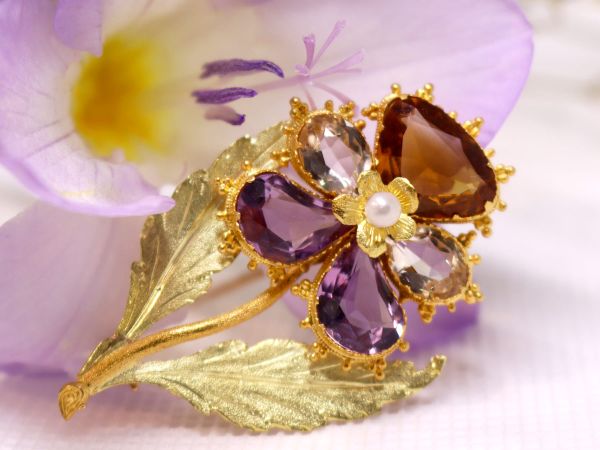
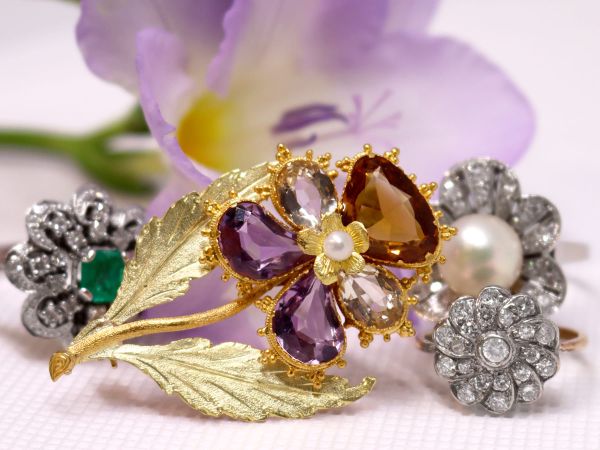
Georgian jewellers also mastered the technique of creating ‘En tremblant’ jewellery, pieces fitted with a delicate spring-like mechanism allowing parts to move or tremble. The technique was especially effective for bringing butterfly and floral motifs to life.
Georgians used different flowers to symbolise different meanings, such as using roses for love and forget-me-nots for remembrance. This symbolism and language of flowers developed even stronger by the Victorian era!
Victorian Era (1837–1901)
The symbolism of flowers became more elaborate and widely recognised in society by the Victorian era. This was known as floriography and it allowed the Victorians to express emotions and intentions through carefully chosen blooms—often in secret in an era of strict etiquette and social values. It wasn’t always simple symbolism either – some flowers carried longer messages and some even hateful:
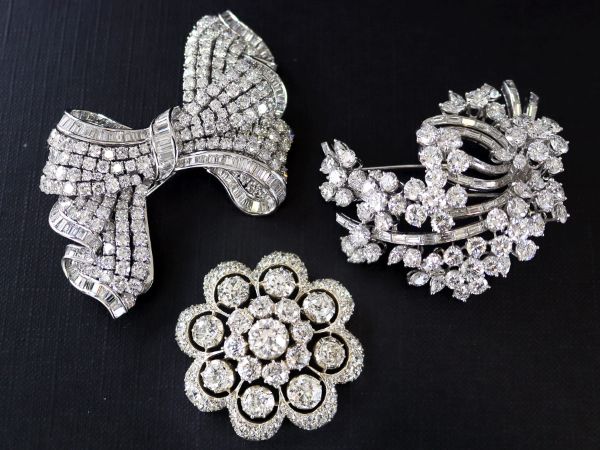
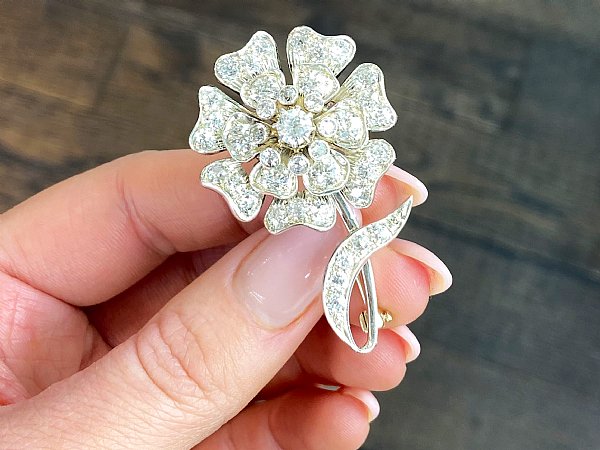
Lilly of the valley – ‘Happy again’
Red carnation – ‘My heart aches for you’
Daisy – ‘I love you truly’
Sunflower – ‘Haughtiness’ (on account of their exaggerated size)
Tansy – ‘Hostile thoughts’
Queen Victoria’s love of jewellery had a profound influence on the public’s embrace of floriated brooches. She was frequently seen wearing pieces featuring orange blossom motifs, a romantic nod to her deep affection for her husband Prince Albert. One of the first gifts he had sent to her following their engagement in 1839 was a gold and porcelain brooch in the form of a sprig of orange blossom. Orange blossom represented purity, chastity, and love and was accompanied with a heartfelt note that read, “May you think with love of your faithful Albert when you take it into your hand.” Queen Victoria went on to wear a wretch of orange blossom on her wedding days and the motif on several jewels.
Edwardian Era (1901–1910)
Following the mourning period of the late Victorian era, jewellery of the Edwardian era embraced softer, lighter elements. Floral brooches were typically crafted in platinum, a newly popular metal that allowed for incredibly delicate settings and metal work, allowing for styles like filigree to become popular.
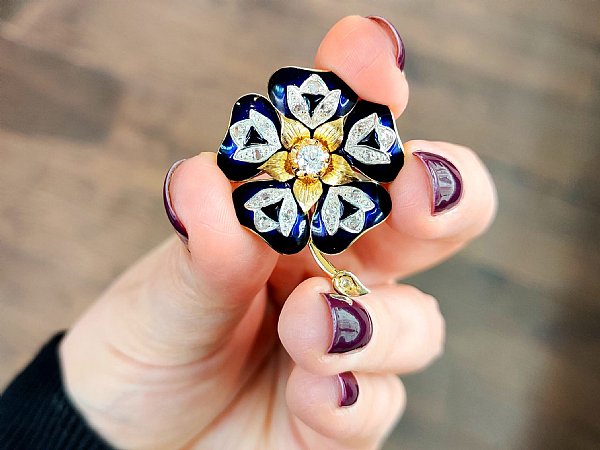
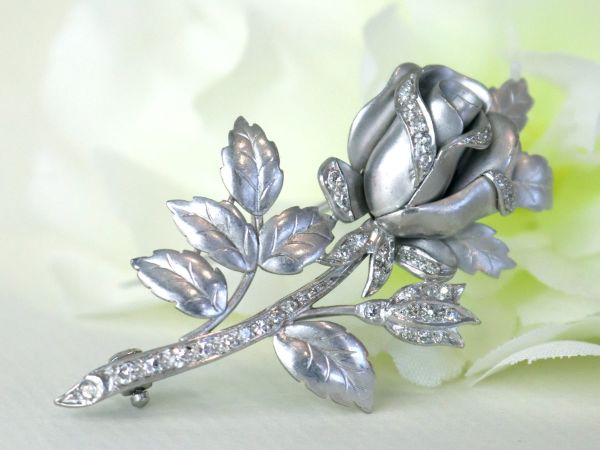
Bright gemstones such as diamonds and pearls and colourful gems like amethysts and opals echoes the romanticism of the early Georgian era but with a more refined finish perfect for complimenting the soft pastels of the Edwardian fashion. Delicate styles like wreaths, garlands or single stem flowers are popular brooch designs in this era.
Art Nouveau (1890–1915)
The Art Nouveau period largely overlaps the Edwardian era as a transitional period that focused on free-form design and natural motifs. Art Nouveau translates to ‘new art’ and was thought to symbolise the evolution towards more futuristic styles. This period saw floral design reach a peak of artistic expression with exaggerated, free-flowing styles. Art Nouveau jewellery interprets shapes found in plants, flowers, and the female physical form, taking huge inspiration from the natural world.
Colourful enamel and gems like opal and turquoise are used to create eye-catching designs whilst metal work is manipulated into flowing shapes. Art Nouveau floral brooches are often elaborate and romantic, using long sweeping lines. Edwardian jewellery takes inspiration from the era but is generally considered to be more refined.
Discover historical floral brooches in our carefully curated collection, where every petal holds a story.